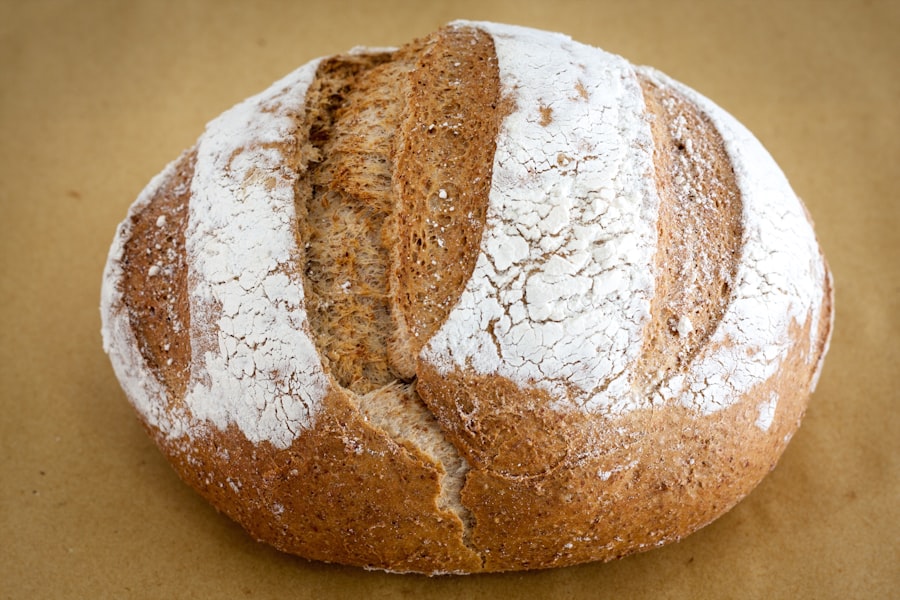
Sourdough looks complicated. Timelines, hydration percentages, mysterious starter jars — it can feel like a science experiment. But at its core, sourdough is just flour, water, salt, and time. The starter is simply a living culture of wild yeast that you feed and maintain.
First: Build Your Starter
A starter takes 5–7 days to become reliably active. Each day, discard half the starter and feed it equal weights of flour and water. By day five or six, it should reliably double in size within 4–8 hours of feeding — that's when it's ready to bake with.
Basic Sourdough Loaf
- 450g bread flour (strong white flour)
- 325g water, room temperature
- 90g active sourdough starter (at peak activity)
- 9g fine sea salt
The Process (Simplified)
Autolyse (30 minutes)
Mix flour and 300g of the water. Let it rest 30 minutes. This rest period allows the flour to fully hydrate and gluten to begin forming — without any effort from you.
Add starter and salt
Add the starter and the remaining 25g water, then the salt. Squeeze and fold the dough until everything is fully combined. It will be shaggy and a bit sticky — that's fine.
Bulk fermentation (4–6 hours)
Over the next 4–6 hours at room temperature, perform 4 sets of stretch-and-folds, spaced 30 minutes apart. After the last set, leave the dough alone until it has grown 50–75% and looks airy and domed.
Shape and cold proof
Gently shape the dough into a round or oval loaf. Place it seam-side up in a floured banneton or bowl lined with a floured cloth. Cover and refrigerate overnight (8–16 hours).
Bake
Preheat your oven to 250°C with a Dutch oven inside. When ready, turn the cold dough onto a sheet of parchment, score the top with a sharp knife, and carefully lower it into the Dutch oven. Bake covered for 20 minutes, then uncovered for 20–25 minutes until deep golden brown.
Wait at least one hour before cutting. I know. It's hard. But the crumb sets as it cools, and cutting too early will give you a gummy interior.
What if it doesn't work?
Your first loaf probably won't be perfect. Mine wasn't. The crust might be pale, the crumb dense, the shape wonky. Every loaf teaches you something. Keep baking.